


Stay
Lodging and hot springs
Welcome to our page highlighting some of Aichi's accommodations and onsen, or hot spring, locations. Whether you're in the market for luxury hotels and hot spring Japanese inns or sustainable hotels with consideration to the environment as well as camp sites and glamping establishments to commune with nature, you'll find them here.
We've put together the allure of each area and the characteristics of Aichi's onsens in easy-to-understand form while offering info on lodging for relaxing hot spring trips, family vacations, outdoor outings, and foodie excursions—all you need to know enjoy a comfortable stay.
You can easily make a daytrip to surrounding Tokyo, Osaka, Kyoto, Kanazawa, and Shizuoka with Aichi as your home base as our prefecture is blessed with an extensive transportation infrastructure.
Take off from centrally located Aichi via a widespread network of railways—including "shinkansen", or "bullet trains"—and highways, offering effortless access for your exploration of Japan's different regions.

Areas around only two hours from Aichi and perfect for a daytrips
Check out our suggestions with one-way travel times!
-
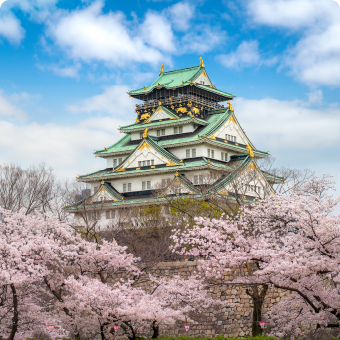
Osaka • Railway: Shinkansen (bullet train)
• One-way time: Approx. 55 min. (Nagoya – Shin-Osaka) -
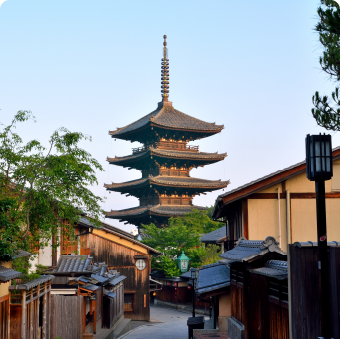
Kyoto • Railway: Shinkansen (bullet train)
• One-way time: Approx. 40 min. -
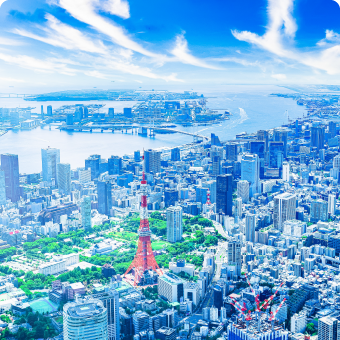
Tokyo • Railway: Shinkansen (bullet train)
• One-way time: Approx. 1 hr., 40 min. -
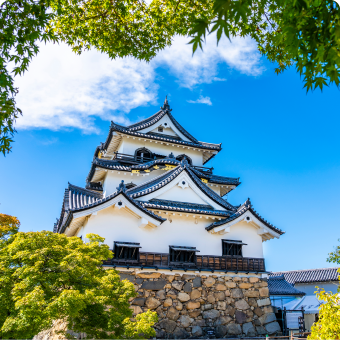
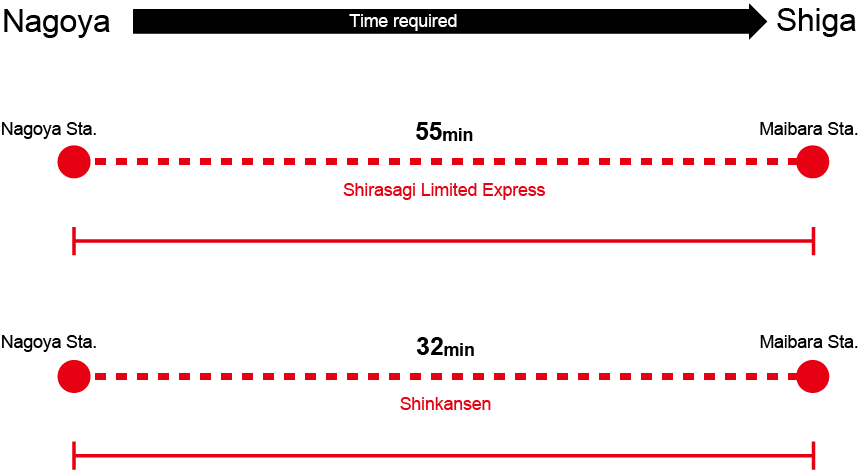
Shiga • Railway: Shinkansen (bullet train)
• One-way time: Approx. 32 min. (Nagoya – Maibara) -
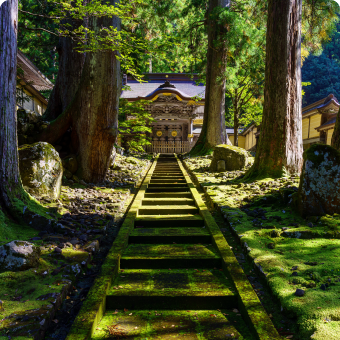
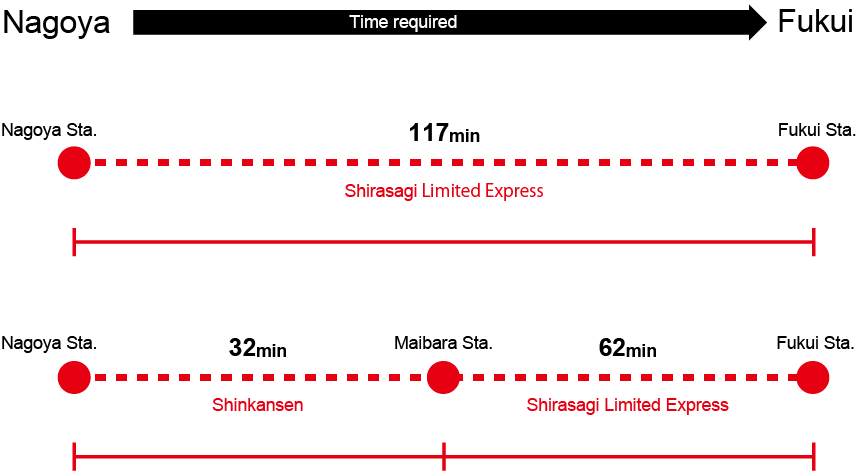
Fukui • Railway: Shinkansen (bullet train) and conventional JR line(s)
• One-way time: Approx. 2 hr., 10 min. -
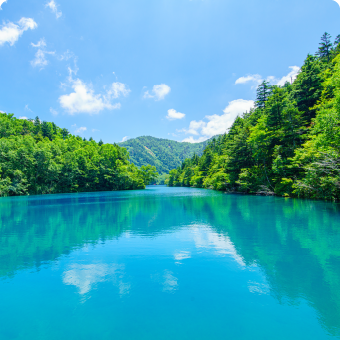
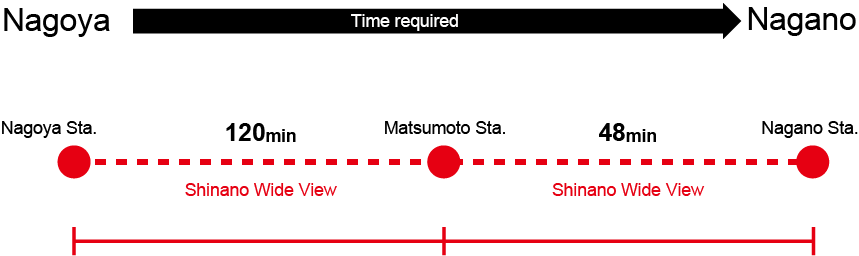
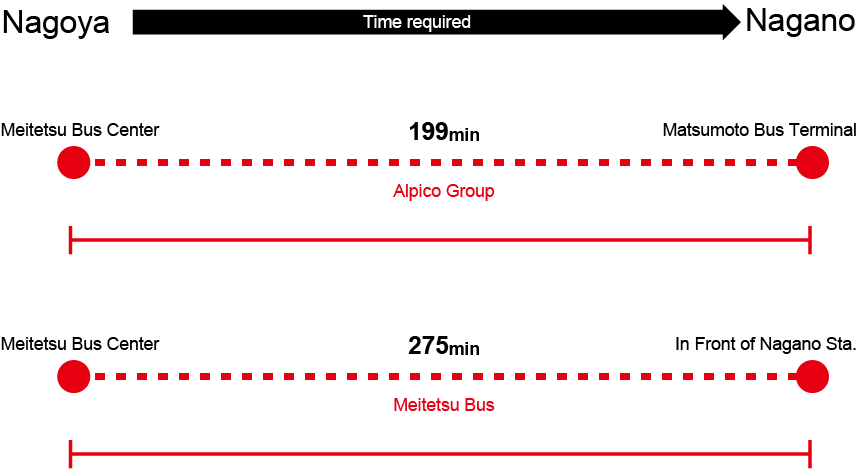
Nagano • Railway: Conventional JR line(s)
• One-way time: Approx. 120 min. (Nagoya – Matsumoto) -
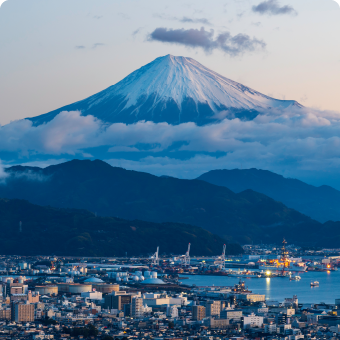
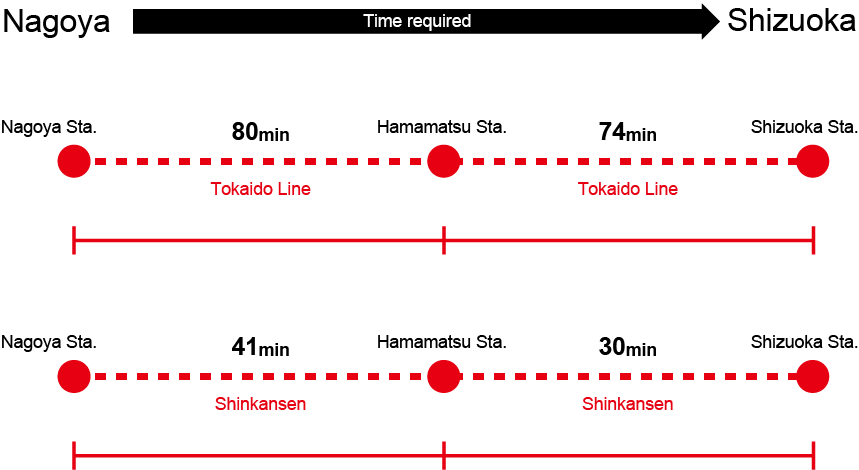
Shizuoka • Railway: Shinkansen (bullet train)
• One-way time: Approx. 1 hr., 11 min. -
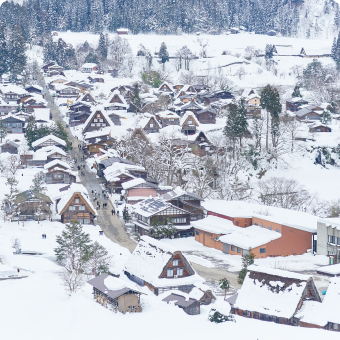
Gifu • Railway: Conventional line(s)
• One-way time: Approx. 20 min. -
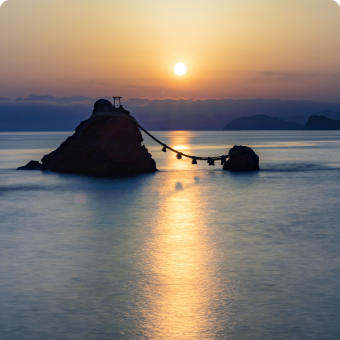
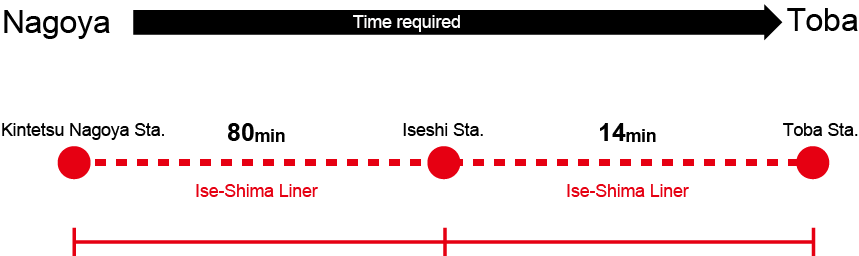
Mie • Railway: Conventional JR line(s)
• One-way time: Approx. 1 hr., 20 min. (Nagoya – Ise)

Routes to recommended sightseeing spots if you're in the area for a while
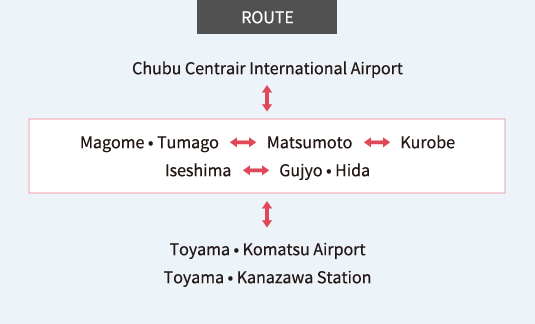
Central Japan Crossing Road
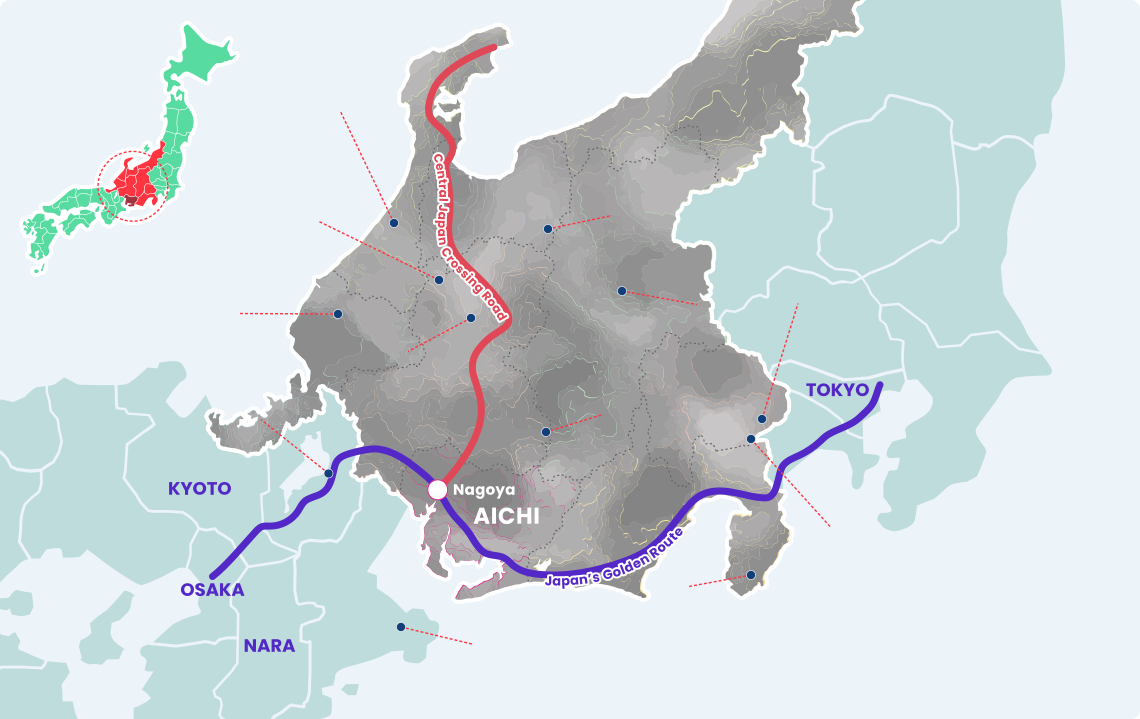
The Central Japan Crossing Road is a new tourism route running from north to south through the middle of Aichi Prefecture and is full of adventure, gastronomy, distinctly Japanese views, and samurai sites.
- Prefectures along the way:
- Toyama, Ishikawa, Nagano, Gifu, Aichi, and Mie
Unknown Golden Route
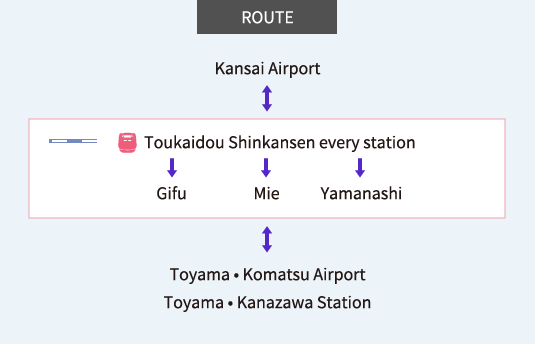
The Unknown Golden Route is a tourism route running from east to west through the middle of Aichi Prefecture and allowing for itineraries exploring Japan's signature sightseeing spots and local, hidden gems.
- Prefectures along the way:
- Yamanashi, Nagano, Gifu, Aichi, Mie, and Shiga







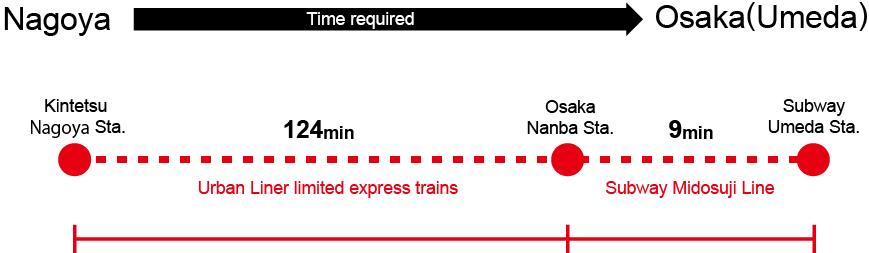
Osaka



Osaka, the largest city in West Japan, is a powerful place no matter when you visit it. It's the home of Japan comedy, and with all the takoyaki, okonomiyaki and other inexpensive, delicious "flavors of the common people," it's only natural that it also gets called an "eat till you drop" town.
The city's symbols are on the one hand the mighty donjon of Osaka
Castle, and on the other hand the downtown landmark Tsutenkaku. The Tower of the Sun built by artist Taro Okamoto at the venue of Expo '70
held in 1970 is also very popular.
The bay area also has some world-class sightseeing spots, such as Universal Studios Japan and an aquarium with gigantic whale sharks.
Osaka Info (Official Osaka tourism information website run by theOsaka Convention & Tourism Bureau)
Getting there from Nagoya
By Central Japan Railway

By Kintetsu Railway
Kyoto



Kyoto flourished as the capital of Japan for 1,000 years. It is a place that can even be said to symbolize "Japan", and history and traditions remain very much in evidence in 17 World Heritage sites and large numbers of national treasures, important cultural properties, events, customs, cuisine, townscapes and in the lifestyle.
Besides of course in the city's large numbers of famous places and historic sites, impressive scenery also awaits even in obscure little alleys. With the expressions of towns that change their aspect according to the changes in nature throughout the year and more besides, even if you visit again and again, you will experience new discoveries and the moving, deeply attractive ambience of the old capital.
ANOTHER KYOTO Official Travel Guide
Kyoto Travel Kyoto City Travel Guide
Getting there from Nagoya
By Central Japan Railway

Tokyo



Tokyo is a world-class city of tourism with many faces, from modern buildings like Tokyo Tower, Tokyo Skytree and Roppongi Hills that reach up into the sky, to downtown areas where the human warmth of good old Japanese people and sights like Sensoji Temple with its grand gate Kaminarimon still remain, to the scramble intersections in Shibuya over which pedestrians stream like the waters of a flood, to Akihabara, which while being a world-famous electronics quarter, also has another face, that of a holy land for nerds and sub-culture. And these are just a few examples. The whole city is full of things to enjoy, like one great theme park.
Go Tokyo Official Tokyo Travel Guide
Getting there from Nagoya
By Central Japan Railway

Shiga



Lake Biwa, Japan’s largest lake, occupies approximately one-sixth of the prefecture's area, and is a place dotted with rare scenery, such as Shirahige Shrine, which has a torii gate that floats on the lake, and Ukimido Temple, the enshrinement hall of which does the same. You can enjoy "suigo meguri," water channel boat tours which cruise the waterways in the city of Omihachiman.
Also, this land has been a major traffic point since ancient times and flourished as a place with an advanced culture and economy. There are many popular sights, such as Hikone Castle, a famous castle designated as a national treasure, Hieizan Enryakuji Temple, which was founded in 788, and Eigenji and Kongorinji Temples, famous for their red autumn leaves. Koka is home to the Koka Ninja, and also has Koka Ninja Village, a theme park where you can enjoy getting into the ninja mood.
SHIGA•BIWAKO SHIGA Tourism Official Website
Getting there from Nagoya
By Central Japan Railway
Fukui



In contrast to the harsh natural beauty of Tojimbo, in Fukui Prefecture, beautifully clear beaches dot the coastline of Wakasa and Tsuruga Bays. Among the great pleasures are seafood such as snow crabs and flathead flounders.
Echizen Ono Castle, a mountain castle, is also a popular spot. Rising up into the sky, in the right meteorological conditions, the castle can be seen floating on a fantastic sea of clouds.
The prefecture has a diversity of other attractions besides, such as a world-famous dinosaur museum that is a treasure trove of dinosaur fossils, and Eiheiji Temple, the head temple of Soto Zen where you can take an overnight training experience if you apply in advance.
DISCOVER FUKUI Official Travel Guide
Getting there from Nagoya
By Central Japan Railway
By bus

Nagano



Nagano is one of the most mountainous areas in Japan. This prefecture not only has some of Japan's most famous scenic areas (such as Kamikochi), large numbers of hot springs (such as Kamisuwa) and mountain climbing in summer: it also has the ideal environment for enjoying winter sports, with ski resorts that get excellent quality snow in winter.
In addition to nature, you can feel Japanese history and culture in places like National Treasure Matsumoto Castle in the center of the prefecture and Zenkoji Temple, a focus of deep and widespread devotion as a spiritual anchor of the masses since its foundation 1,400 years ago.
With Shinshu soba, oyaki dumplings and more, Nagano's unique local food culture is another one of the region's big draws.
Go NAGANO Nagano Prefecture Official Tourism Site
Getting there from Nagoya
By Central Japan Railway
By bus
Shizuoka



In the vicinity of sacred Mt. Fuji, a registered World Heritage site, there are many shrines connected with the mountain, for example Murayama Sengen Shrine and Suyama Sengen Shrine, and you can get a glimpse of the history and culture of Mt. Fuji worship. Miho no Matsubara, another World Cultural Heritage site registered to form a pair with Mt. Fuji, present the magnificent view of more than 30,000 pine trees standing side by side for approximately seven kilometers along the seashore.
Thanks to the warm and comfortable climate, Shizuoka is known for being the largest producer of green tea in Japan. The wide variety of hot springs which abound in the individual character regions Atami, Izu and Shuzenji also attract large numbers of visitors.
Getting there from Nagoya
By Central Japan Railway
By bus

Gifu



Shirakawa-go, Hida Takayama and Gujo Hachiman in the snowy Hida area retain their atmospheric old townscapes, and are popular among domestic and overseas tourists.
Also, strong signs of history remain in the Mino area: Gifu Castle, base of Oda Nobunaga, hailed as supreme rule in the Sengoku period; Sekigahara, the old battle field that split the history of Japan in two; post towns preserved along the Nakasendo, a major road in times when people used to go from place to place on foot; cormorant fishing on the Nagara River, an ancient fishing method that is recorded in books written more than 1,000 years ago. And these are just a few examples.
Getting there from Nagoya
By Central Japan Railway

By Meitetsu Railway

By bus

Mie



"Kumano Kodo," the cobbled pilgrimage routes leading to the sacred place that is Kumano Sanzan, were registered as a World Heritage site along with Ise Jingu Shrine in 2004. The routes are popular as original landscapes of Japan. Mie Prefecture is also the home of the Iga-school ninjas.
It is also a famously abundant source of seafood such as Ise spiny lobsters, abalones, oysters, and puffer fish, and is the place where Matsusaka beef, a well-known premium marbled Japanese beef, is produced.
In addition, there are lots of leisure spots, such as Suzuka Circuit, where Formula One races are held, Shima Spain Village, a complex of resort facilities, and Nagashima Spa Land.
Getting there from Nagoya
By Central Japan Railway

By Kintetsu Railway
Kanazawa



Kenrokuen was created over many years by the feudal lords of Kaga Domain who ruled this region in early modern times. Occupying a vast site in the outer ward of Kanazawa Castle, the garden has been laid out in the form of a strolling-style garden incorporating trees and ponds, with Kasumigaike Pond, Chikuyama, and the Ochin building with tea rooms arranged within. This famous garden shows a different beauty in each of the four seasons: blooming Japanese plums and cherry blossoms in spring, shining green summer, the colorful leaves of all the trees in autumn, and snowscapes in winter.
Shirakawa-go Village (world heritage)



The dwellings that form this village, which could even be said to be part of the original landscape of Japan, are called "gassho-style" because the shape of the steep thatched roofs particular to areas with heavy snowfall look like "gassho," that is, the way people put their hands together when they pray. There are 114 gassho-style houses in Shirakawa-go, which together with Gokayama in Toyama Prefecture was registered as a UNESCO World Cultural Heritage site in 1995, and even today villagers help each other to look after their houses in the midst of their daily lives.
Eiheiji Temple



The temple of Eiheiji was established in 1244 as a temple of the Soto school of Zen Buddhism, by Zen Master Dogen (1200–1253). The temple is located in a deep mountain valley with more than 70 halls and towers. Today, Eiheiji is one of the head temples of the Soto school. This major temple has long had a reputation for scrupulousness, and even today, monks come to practice from all around Japan. Every single part of life here—even meals, cleaning the temple, and washing oneself—is considered an important part of Zen practice.
Takayama



Takayama City is situated in the northern part of Gifu Prefecture, at the heart of the Hida region. It is approximately two hours from Gifu City via the JR Takayama Main Line or the Tokai-Hokuriku Expressway.
Highlights include the “Old Townscape” lined with traditional Edo-period houses, morning markets held daily at two locations, the “Norikura Skyline” offering expansive views of nature, and the “Shinhotaka Ropeway”.
Its rich culinary culture, exemplified by Hida beef, local sake, and Takayama ramen, is another major attraction.
Hikone Castle



Hikone Castle is an early modern castle that began construction in 1604 and took about 20 years to complete. It was once a large citadel that included triple moats, an artificial river (now Serikawa River), and a castle town. In the area from the inner moat inward, the planar structure of the castle composed of stone walls has been preserved in an exceptional condition. This led to its designation as a Historic Site in 1951 and later as a Special Historic Site in 1956, marking it for careful protection as a national common property.
The entire structure of Hikone Castle is preserved in excellent condition and is considered a representation of the political system of the Edo Period (1603-1867).
Ise-Shima



Ise-Shima is a destination where you can relax and unwind, offering a blend of history and culture centred around Ise Grand Shrine, expansive natural landscapes surrounded by sea and mountains, and cuisine featuring fresh seafood. Stroll through Oharaimachi and Okage Yokocho to soak up the traditional atmosphere, or venture a little further to take in the beautiful scenery of Ago Bay. Whether you wish to take it easy or explore thoroughly, the charm of Ise-Shima lies in being able to enjoy it at your own pace.
Kurobe-Unazuki Canyon Route / Tateyama Kurobe Alpine Route



This world-famous mountain sightseeing route runs for approximately 90 kilometers between Toyama and Nagano through the Northern Japan Alps, where mountains that reach elevations of more than 3,000 m come one after the other. You can visit lots of places, such as Kurobe Dam, which is one of the largest dams in Japan, the Shomyo Falls, famous for having the highest waterfall in Japan, and the Midagahara Plateau, with its blooming alpine plants. The "Great Valley of Snow" is a particular must see. It appears from mid April to mid June, and visitors get to stroll between walls of snow some 20 m high.
Matsumoto Castle



Matsumoto Castle stands against a backdrop of the white Northern Japan Alps, which contrast strikingly with the black donjon. The 5-tiered, 6-story donjon is said to have been built around 1593, and is one of the oldest existing donjons in Japan. It has been designated as a national treasure castle. The Michelin Green Guide Japan has given it its highest rating of three stars as a sightseeing destination that is "worth a journey."
Oshino Hakkai Ponds



Long ago, Lake Oshino underwent repeated volcanic activity from Mt. Fuji, gradually being eroded and drained away through the narrow gap between the base of Mt. Fuji and the Misaka mountain range. After a long period, the lake finally dried up. However, several spring pools originating from Mt. Fuji's underground water flow remained. The most representative of these spring pools is what is now known as the “Oshino Hakkai”. Snowmelt accumulating on Mt. Fuji filters through layers of impermeable lava underground over decades, transforming into crystal-clear water. Beautiful and mysterious, the sight of Mt. Fuji reflected on the water's surface, adorned with the colours of the changing seasons, seems to gently remind visitors of water's true nature and the beauty that must be protected.
Mt. Fuji



Mt. Fuji, Japan's highest peak at 3,776 metres, is also the nation's most iconic isolated mountain.
Formed by a submarine volcano erupting between 23 million and 5 million years ago, Mt. Fuji is a stratovolcano shaped by four major eruptions over time.
As altitude increases, the slope of its flanks steepens, creating a beautiful conical shape. Its southern foothills extend all the way to Suruga Bay, boasting one of the world's highest continuous slopes from sea level to summit for a stratovolcano.
Viewed from afar, its form, flaring out to its base, makes it Japan's most beautiful mountain.
Magome and Tsumago Villages



The Nakasendo, which alongside the Tokaido saw heavy traffic during the Edo period. This ancient route, particularly the stretch between Magome-juku and Tsumago-juku, retains a strong sense of its former character and has been developed as the Old Nakasendo Shinanoji Nature Trail. The trail, stretching approximately 9km from Magome-juku to Tsumago-juku (Magome-juku → Magome Pass → Tsumago-juku), takes around 3 hours to complete. Hikers can enjoy the beautiful scenery of the Kiso mountains, valleys, and waterfalls, which changes with the seasons.
Izu



Izu is a peninsula area rich in nature, stretching from eastern Shizuoka Prefecture towards the Pacific Ocean. Thirteen distinctive towns line its coast, offering a concentrated blend of diverse attractions: a magnificent coastline, mountains, hot springs, and abundant local produce. Its excellent accessibility from the Tokyo metropolitan area is another appealing point, making it easy to visit on a whim. A journey awaits where you can refresh both mind and body whilst enjoying the unique landscapes shaped by ancient volcanic activity, bubbling hot springs, beautiful seas, and a bounty of delicious food.
